
3 Things to Remember When Building Your Campfire
Updated: Jun 5
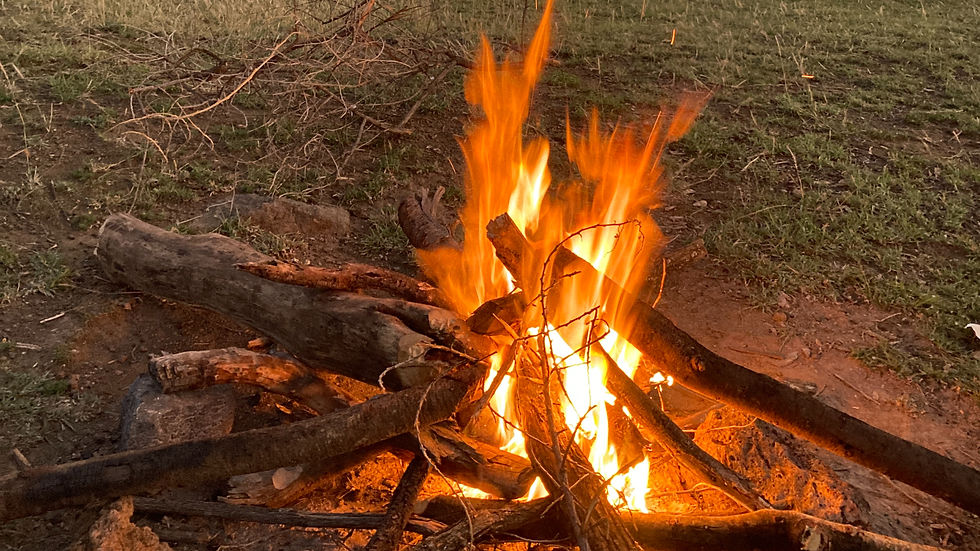
A campfire is an important part of any camping trip, whether you’re using it to keep warm, cook dinner, or simply to provide some ambiance. There’s nothing we love more than the interesting conversations, laughs, and connection that can happen when a group of friends (or acquaintances, or even strangers) are huddled around a cozy fire on a cool evening.
Read on to find out what you need to build a successful fire on your next camping trip!
1. BASIC SUPPLIES
KINDLING
You need lots of small pieces of wood/paper/cardboard that will catch right away. The kindling needs to catch fast, but also burn long enough to allow the larger pieces of wood to catch. This means that there needs to be a fairly large amount of it and that the flames from the kindling should be physically touching the larger pieces of wood. We never regret bringing too much kindling!
MATCHES
If you want to be really hard core and cause enough friction with sticks to make a spark, be my guest. Otherwise, bring matches.
FIREWOOD
This one goes without saying, but sometimes the most obvious things are the easiest to forget! It’s really helpful to have dry pieces of wood, but if you have enough kindling, the flames will eventually dry the wood out and then allow them to catch.
2. TIPS & TRICKS
There are a few ways to build your fire. Two popular structures are the teepee and the log cabin. The names are fairly self explanatory — the teepee is cone-shaped and the log cabin is arranged in a cube — each with the kindling in the center. Fire needs oxygen to survive, so there should be some space in your structure to let the oxygen flow. Fanning or blowing into the fire can be key to helping it spread (frisbees and plates make great fans).
If you have wet wood or are at a high altitude where there’s less oxygen (or even just to make the process easier or faster) you may be interested in having some additional help. There are plenty of options for sale, including fire-starting matches and liquid fire starters. However, we recommend making your own DIY fire starters. Not only is it cheaper, but it means that you’ll be using things you would otherwise throw away, like toilet paper rolls, scrap paper, or cardboard. You can melt wax from old candles and dip crumpled up cardboard or newspaper in, leaving some of the original paper exposed to act as a wick. Or you can soak wine corks in rubbing alcohol, or cotton wool in vaseline. You can even use dried orange peel, which is not only flammable, but also gives off a nice aroma! A quick search on the web will give you more ideas than you’ll know what to do with, but we found this article quite helpful.
3. SAFETY & RESPONSIBILITY
Before starting your fire, always ask if they are allowed at your campsite — there may be certain seasons or locations where it is too dry to safely have one. If it is allowed, make sure the fire is surrounded by rocks or another barrier (even a ring of dirt) that ensures nothing outside of the fire pit is able to catch.
Fires are useful, cozy, and create an amazing atmosphere — but they’re also incredibly hot (go figure). Be as careful as possible around it, taking the necessary precautions, such as using sticks to help you maneuver the logs or oven mitts to place pots and pans on safely. If you have kids in your camping group, be especially careful, teaching them to keep a safe distance, but also keeping a close eye on them at all times. And, just in case, it’s advisable to bring a first aid kit with burn gel to prepare for the unexpected. Our favorites can be found he


Comments